



The Birkett Six-Hour Relay has one of the most varied grids in British motorsport, and one of the most generous ideas behind it: that any team on that grid can win. On a soaking Saturday at Silverstone in October 2026, it proved exactly that.
The Birkett Relay: the UK's biggest motor race
The 750 Motor Club describes the Birkett as the UK's largest annual motor race. The grid can hold up to 70 teams, each running between three and six drivers and between three and six cars, which usually means around 300 cars and drivers taking part in a single race on the full Silverstone Grand Prix circuit.
This year 66 teams took the start on Saturday 24 October, with 267 drivers between them.
The race is also the traditional close to the club racing season, and it gathers a cross-section of the whole year into one paddock. Because the field is multi-class, cars of very different speeds share the track for the full six hours.
Birkett Relay 2026 at a glance
When: Saturday 24 October 2026
Where: Silverstone Grand Prix circuit, 3.6604 miles
Organised by: the 750 Motor Club
Starters: 66 teams, 267 drivers
Conditions: heavy rain, very wet track
Handicap winners: Racing Dads Club (#33)
Scratch winners: Bald & Grey (#15)
Full results: TSL Timing
Photos: Birkett Relay 2026 gallery
75 years of the Birkett Six-Hour Relay
The race dates back to 1951 and was the idea of Holland "Holly" Birkett, one of the 750 Motor Club's founder members. It was renamed in his honour following his passing in 1963. The 2026 running marked the 75th anniversary of the six-hour race and, because of a one-off 12-hour edition run for the 50th anniversary, the 76th Birkett event overall.
The roll call of past competitors is remarkable for a club race. Graham Hill and Gerry Marshall appear among the winners, Jim Clark and Steve McQueen among the entrants, while BBC Top Gear brought Chris Harris, Rory Reid and Matt LeBlanc to the grid in a Mercedes 600 SEL, a Rolls-Royce Silver Shadow and a Bentley Turbo R. For all that history, the race remains open to any non-novice club racer.

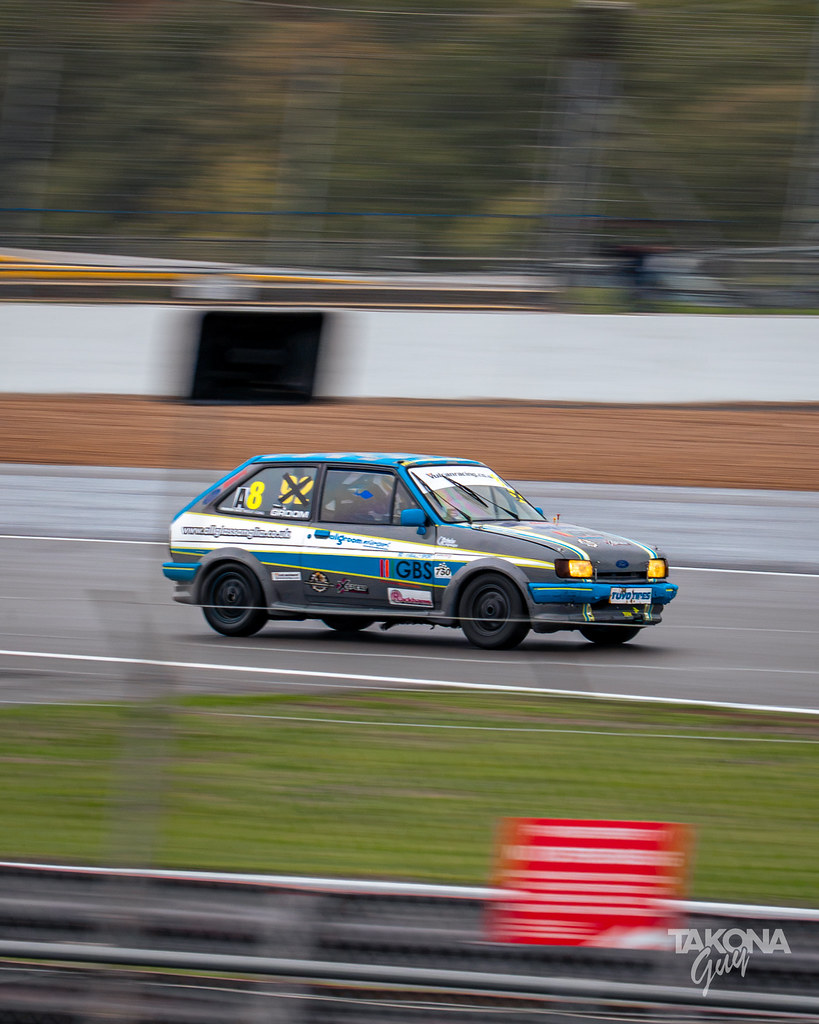
How the Birkett Relay and its handicap work
Each team has six hours to complete as many laps as possible, with only one of its cars on track at any time. When one car comes into the pit lane, the next is sent out.

That creates two races in one. The quickest teams fight for the scratch win, awarded to whoever completes the most laps outright. Most of the field is chasing the handicap win instead, which adds a set number of credit laps to each team's total. In theory, any team can win.
Those credit laps are calculated from the car and driver details each team gives on entry. The entry form asks every driver for their best lap time in that car at Silverstone's Grand Prix circuit, or at a comparable circuit if they have not raced there, and whether that time was set in the wet or the dry. Qualifying then gives each driver around 20 minutes on track, letting the organisers check that pace and adjust the handicap before the start. The slower a team is expected to be, the more credit laps it receives.
Entry is open to closed-wheel cars, which is why the grid is so broad. The club's own description runs from MG Midgets to BMW M3s, TCR cars, classic saloons, Caterhams and modern sports racers. Very few races put that range of machinery on one circuit at the same time, and fewer still give every one of them a realistic route to silverware.

Six hours of spray and standing water at Silverstone
The official result records the conditions as heavy rain and a very wet track, from the 11:43 start to the finish just before quarter to six. The handicaps were adjusted during the day to reflect the conditions and the safety car periods.
None of it dampened the spirit around Silverstone. If anything, the weather sharpened the racing. Every stint became about bringing the car back in one piece to hand over. As the hours passed, the dynamics of endurance racing took hold, and more than one driver climbed out celebrating simply having survived their stint.
Every stint became about surviving to hand over.


Familiar faces, braving it all
Spend enough weekends around paddocks and the names on the entry list slowly turn into friends. This year it felt like every few garages along the Birkett pit lane there was someone to stop and catch up with.
In the CALM Porsche garages, Tom Gray, a past guest on the Takona Tlks podcast and someone who has flown the Takona flag on his socials, was taking his turn in a 986 Boxster for CAP Team Supatune 2. His was one of seven teams on the grid from the CALM All Porsche Trophy, a series that sends all of its profits to CALM, the Campaign Against Living Miserably, a charity working to prevent suicide and support people through tough times. For a community built on cars and conversations about mental health, seeing that cause carried around Silverstone means a great deal.
A few garages along, Nick from Learn 2 Race, who helped me learn to race and get out on track, was strapping into the Powerflex Ford Ka, car 36D for The Tourenwageneers. In garage 3, Ben Corbin, who has proudly carried Takona on the cars he races, had our stickers on the BMW 1 Series he was racing for Motor City Performance, though luck was not on his side, with the car giving up early in his stint and the timing sheets crediting him with a single lap. Then there was Racing Dads Club, the team I did my first races with. I had planned to tackle the 2024 Birkett with them too, so they were the team I was cheering on all day.


Birkett Relay 2026 results: slowest cars, biggest win
The handicap win went to Racing Dads Club (#33). Running a pair of Mazda 2 Sports and a Fiat Panda 100HP, with Ben Pain, Dean Lomas, Joe Jacobs, Colin Risbridger and Robbie Boot sharing the driving, they completed 99 counted laps, which with their 30 credit laps gave a handicap total of 129. That put them one lap clear of Army Sports Car Racing (#24), with 116 Assassins (#47) in third.
Those 30 credit laps were the most of any team in the field, a clear sign of how little pace the handicapper expected from them. Six hours in the wet turned that into the result of the day. With little in the way of budget, the team relied on hard work, support and team spirit, and showed that a motor race can be won without the biggest bank balance or the fastest car.
At the other end of the pace scale, the scratch race went to Bald & Grey (#15), who completed 118 laps and finished a minute and 27 seconds clear of their nearest rival after six hours. Two very different routes to victory, earned in the same six hours of rain.
When the underdogs win, the whole paddock celebrates.


Rivals all season, teammates for one day
Strip away the history and the handicaps, and the Birkett is a race about people. A team is a group of drivers who have agreed to share cars, a garage and six hours of each other's nerves. Behind them sit crews, families, friends and the marshals who stand out in the rain all day so the racing can happen.
Most club races are individual efforts. The Birkett asks everyone to rely on each other, and drivers who spend the season as rivals spend this one day as teammates. That changes the feel of the whole paddock, and it is one of the clearest examples in British motorsport of cars bringing people together, which is the reason Takona exists.
You do not win the Birkett on your own.

The Birkett will be back at Silverstone in 2027, and on this year's evidence, it remains one of the most rewarding days in the British motorsport calendar.
Frequently asked questions
What is the Birkett Six-Hour Relay?
It is an annual six-hour relay race organised by the 750 Motor Club on the Silverstone Grand Prix circuit. Teams of three to six drivers and cars race in relay, with one car on track at a time, and the club describes it as the UK's largest annual motor race.
Who won the 2026 Birkett Relay?
Racing Dads Club (#33) won on handicap with 129 laps, one lap ahead of Army Sports Car Racing (#24). Bald & Grey (#15) won on scratch with 118 laps. Full results are published by TSL Timing.
How does the Birkett handicap work?
Each team receives credit laps before the start, based on its cars and drivers. The handicap result adds those credits to the laps completed in six hours, so a team of small, slower cars can beat much faster machinery.
How many teams raced the Birkett in 2026?
66 teams started the 2026 race, with 267 drivers listed in the official results.
When did the Birkett Relay start?
The first race was held in 1951. It was created by Holland "Holly" Birkett, a founder member of the 750 Motor Club, and 2026 marked its 75th anniversary.
See the full gallery
Every shot from the day is in our Birkett Relay 2026 gallery.
More from Silverstone
Look back at last year's race in our Birkett Relay 2025 gallery, find the full 2026 timing and results on TSL Timing, listen to more conversations from the paddock on the Takona Tlks podcast, or browse the Takona Racing Division range, celebrating motorsport and the people who make it happen. To meet the community in person, come and find us at Coffees & Cars on the second Sunday of every month.
Sources
TSL Timing: 2026 race grid
TSL Timing: 2026 handicap classification
Motor Sport: Holland Birkett obituary, August 1963
Ferrari Owners' Club: Success at Silverstone
Beaulieu: Aristocars from Top Gear filming
BBC iPlayer: Top Gear, series 26, episode 4
750 Motor Club: 2026 Birkett Relay entry pack
RAF Motor Sports Association: Birkett Relay report
TSL Timing: 2026 handicap sheet
CALM All Porsche Trophy
Campaign Against Living Miserably (CALM)
TSL Timing: 2026 full results book
TSL Timing: 2026 scratch classification
The magic of the Birkett Relay.